Case study · Health AI
AyurDoc
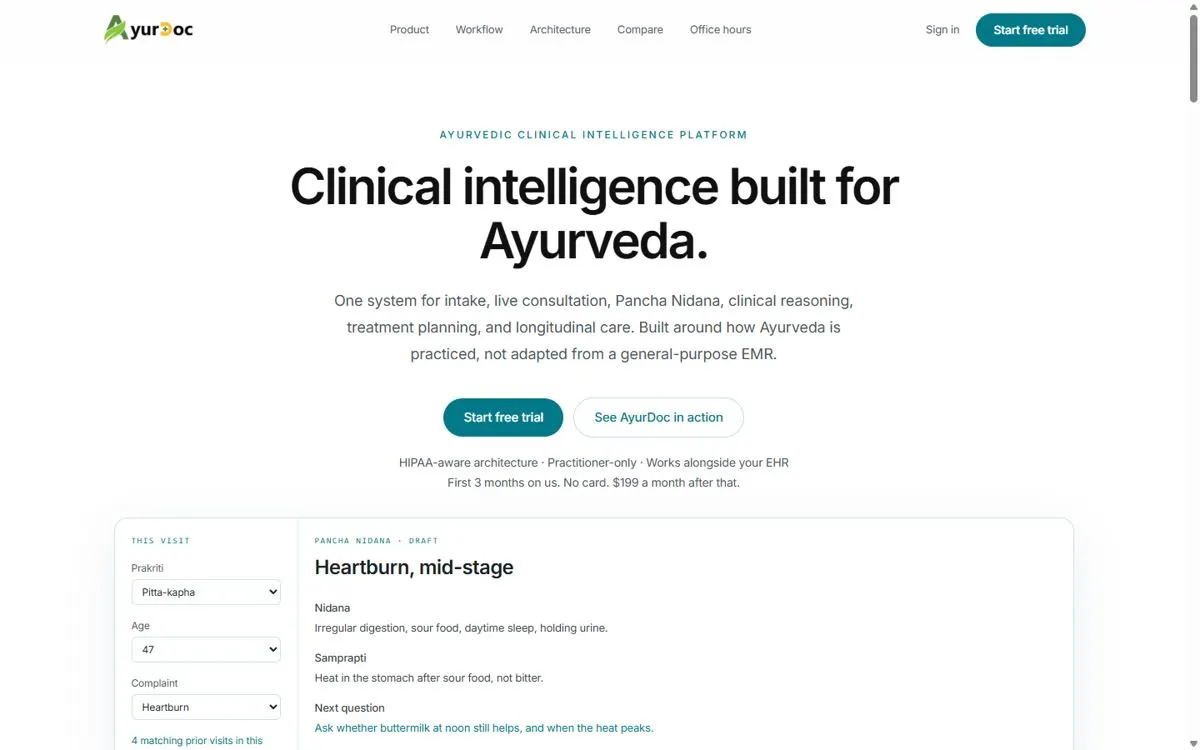
Clinical software for Ayurvedic practitioners. One system for intake, live consultation, Pancha Nidana, clinical reasoning, treatment planning and follow-up care, built around how Ayurveda is practiced rather than adapted from a general-purpose EMR.
The problem
Ayurvedic practitioners reason in terms of Nidana (causes), Samprapti (how the condition developed) and constitution. The software available to them was built for Western clinical notes, so the reasoning happened in the room and the documentation happened later, as an after-hours rewrite into a format that didn't fit.
My role
All of it: the idea, what the product does and who it is for, the software itself, and the marketing on ayurdoc.ai and beyond.
What it does
- Live transcription in the consult room, in Hindi and Kannada as well as English.
- Drafts the Pancha Nidana note during the visit, so the practitioner signs it instead of rewriting it as a SOAP note afterwards.
- Surfaces matching prior visits and suggests the next question to ask.
- Carries the case forward into treatment planning and long-term care.
Decisions behind it
- Ayurveda's structure, not a translated EMR. The note is organised around Nidana and Samprapti because that is how the practitioner already thinks.
- Works alongside the EHR. Clinics keep their existing records system; AyurDoc covers the consult and the reasoning.
- Practitioner-only, HIPAA-aware architecture. It is a clinical tool, not a patient app.
- Low-friction trial. Three months free with no card, then $199 a month, so a single practitioner can try it without a procurement process.
Where it is now
AyurDoc is live at ayurdoc.ai with a free trial for US practitioners. I'm not publishing usage or outcome numbers yet; when there are measured results, they'll go here.